Lake Clark: Turquoise Lake to Twin Lakes
Three friends, none of us seasoned backpackers, and a week in the wilderness of Lake Clark National Park, Alaska. August 2019
There were three of us, young and a little naive. None of us had much backpacking behind us, but we were the fittest we had ever been, and ready to face our fears of the unknown. The idea came from one of us. He had watched the documentaries about Dick Proenneke, the man who built a cabin by hand on Twin Lakes and lived there alone for some thirty years, and he had read about people who had hiked out there before us. That is how we came to choose a corner of Lake Clark National Park in Alaska that no road reaches and no marked trail crosses. We knew that others had made it on foot from Turquoise Lake to the Twin Lakes; what we didn’t know was exactly which routes they had taken.
So we planned, for months. We learned the rules of bear country. We took classes in reading topographic maps, bought a stack of them, and met online again and again to argue over routes and campsites. With no trail to follow, we drew our own line across the contours, and we drew it with the confidence of people who had never carried a heavy pack over rough ground. We knew there was an easier way across: the usual route climbs onto the open tundra west of the mountains and contours around them, almost due south, to the Twin Lakes, with no glacier pass at all. We looked at it, and then we drew our own line straight through the mountains anyway. OK, Alaska: challenge accepted. The pace we planned for turned out to be more than twice what we could actually manage.
None of it prepared us. Our packs were too heavy, and the land was harder than any map could tell us. There were rivers and streams to wade, miles of thick brush to push through, and millions of mosquitoes. Lake Clark was wilder than my wildest imagination. It was also more beautiful than anything I had imagined, and by the end of the week it would give us far more than it took.
The route is drawn from where our photos were taken, so it is approximate between photos; there is no trail. The solid line is our route: from Turquoise Lake, past high camp on the glacier, over the pass at about 1,800 m on the fourth day, to our last camp almost next to the channel between Upper and Lower Twin Lake. The stop at the cabin was by floatplane. The dashed line is a rough sketch of the easier, more usual way: up onto the tundra bench from the west end of Turquoise Lake, then south around the mountains to the bluff above Lower Twin Lake.
August 18
First, Alaska made us wait. Weather grounded our floatplane for a day, so we spent it hiking at Crow Pass, beneath a glacier, and slept near Anchorage that night, impatient to be gone.
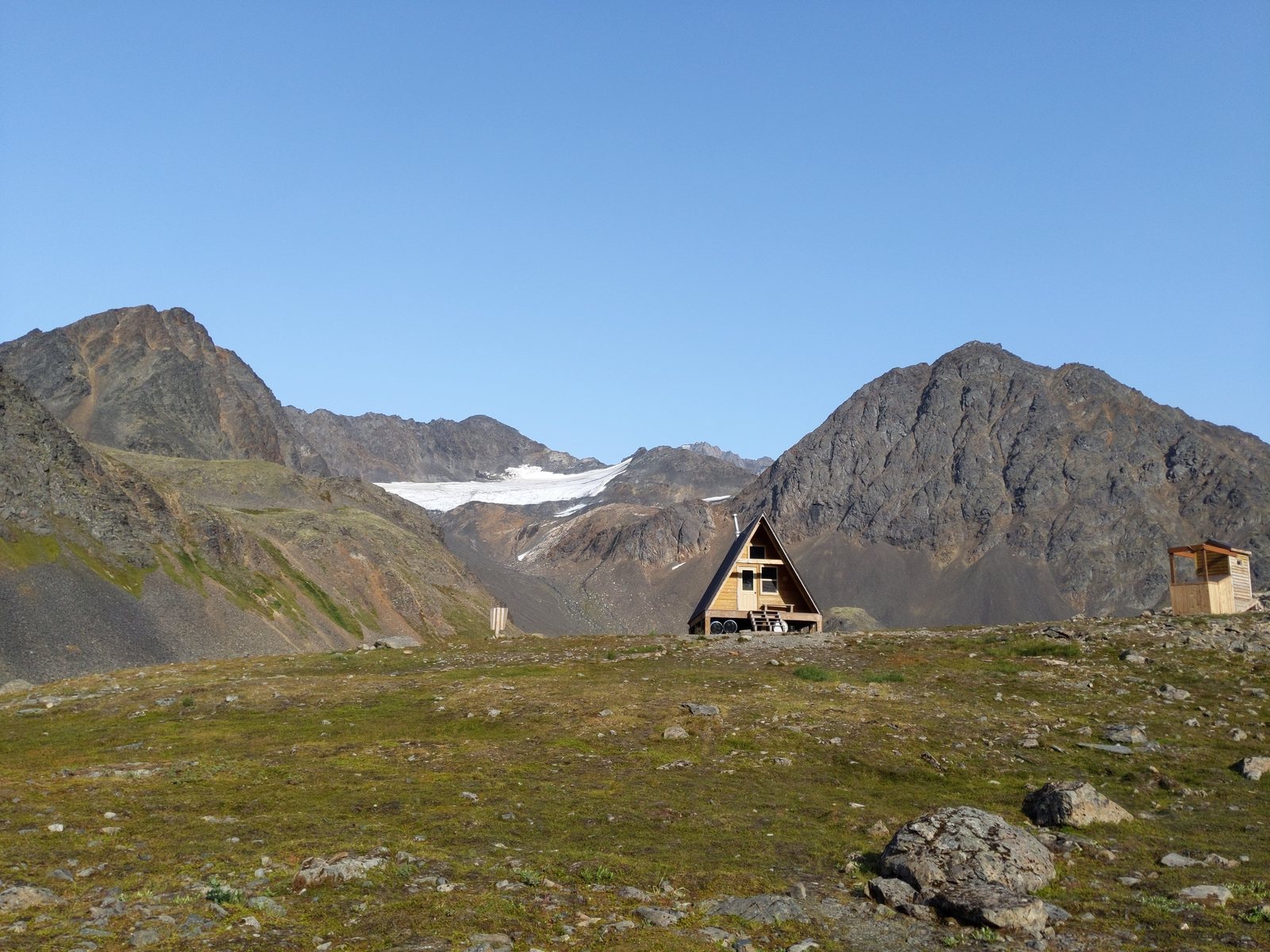
August 19
The next morning the floatplane carried us west, over glaciers and jagged peaks, and set us down on Turquoise Lake.
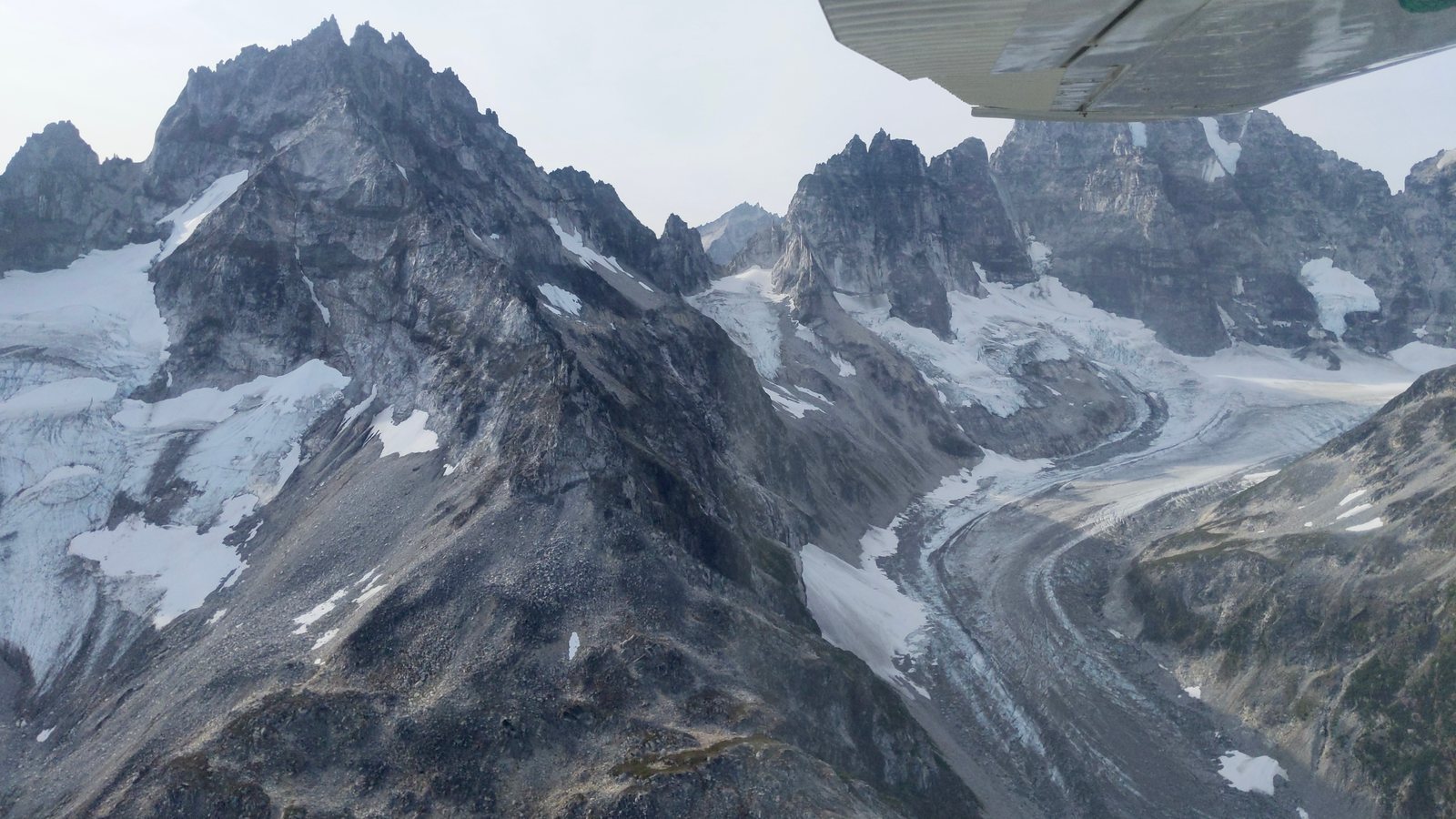
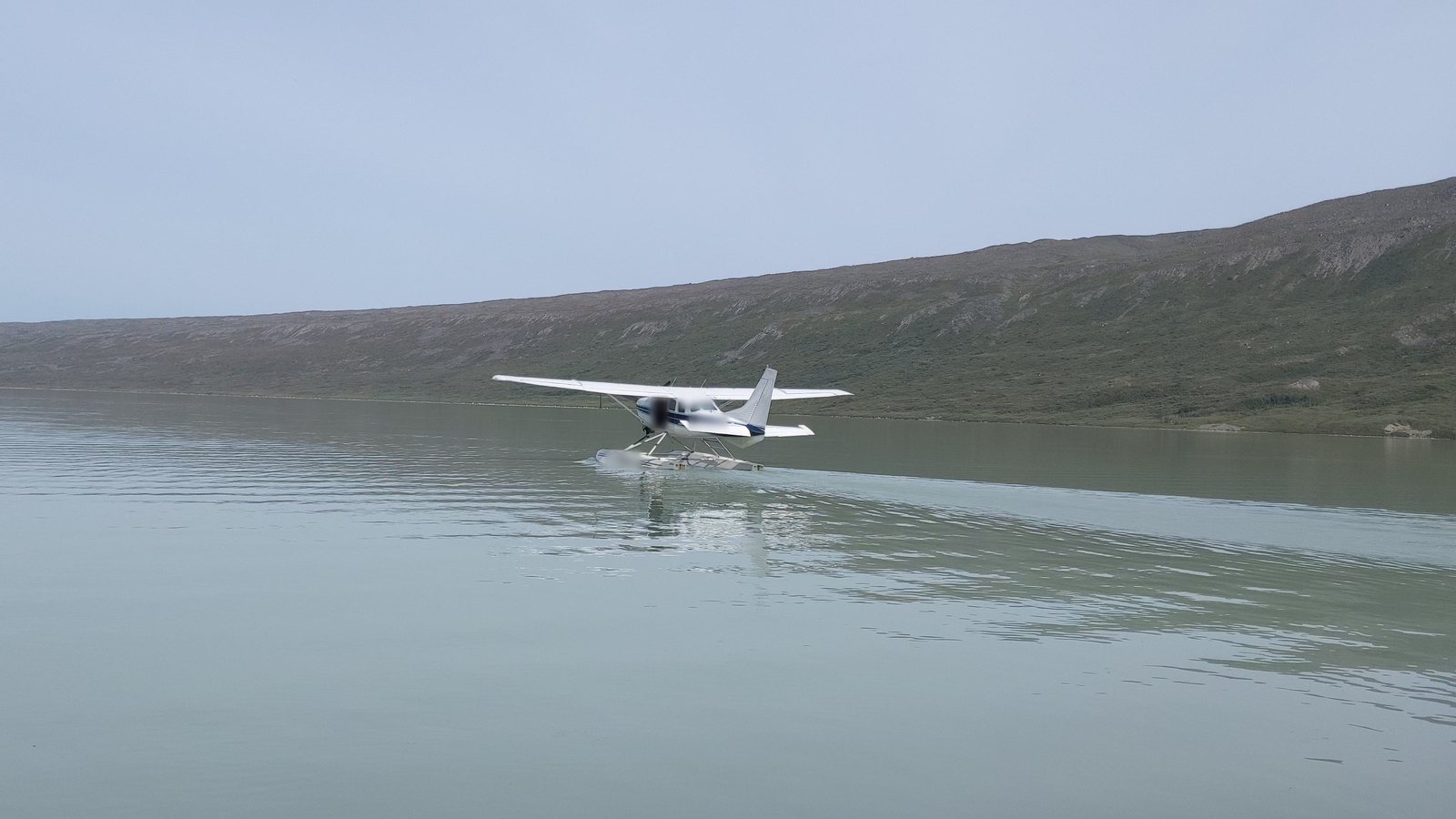
We were so excited, and so naive, that we celebrated as if the hard part were already behind us. We cooked at leisure. We took a dip in the pristine lake. Only a couple of hours later did we shoulder our packs, and within ten or fifteen minutes the park had its first word with us: a water crossing, and wet shoes and socks. The ground was so rough that after barely a mile we stopped and made camp. From there we couldn’t really see the lake anymore; only by crossing a river to the far side of the valley could we catch a small view of it, and even that sliver was majestic.
That first day also gave me the moment I still replay. We were edging along a big rock with almost no footing, and I turned too quickly, without realizing that my heavy pack would catch the rock wall and push me off, a drop of some twenty feet. My feet held on that narrow ledge. The danger was over in a second, but it shook me deep.
August 20
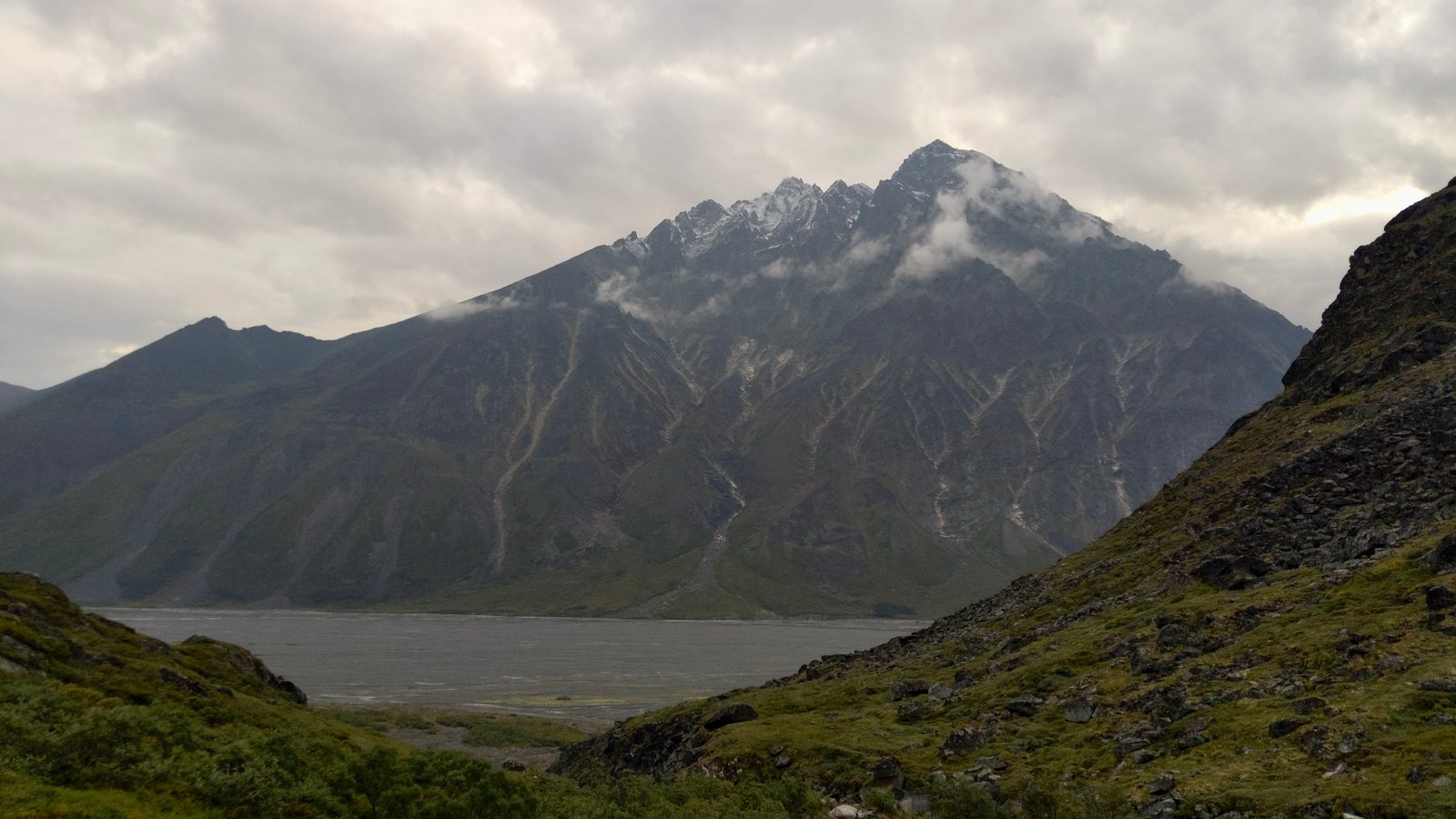
We worked our way up the valley, over boulders and through the brush, toward a hump that blocked the way: a glacier on its left, a steep hill on its right. I have no photo of it. I suspect I didn’t find it pretty.
We had brought water filters, and they never left our packs. So many streams came straight off the glaciers that filtering felt like it would only contaminate the water. The park service had told us it should be pretty safe. We knew there was still a small chance of getting sick, but the lure of drinking straight from a glacier won every time, all the way to the end.
The weather, meanwhile, played hide and seek. The sun would come out, it would turn warm, and off came our jackets; within an hour a breeze would roll down off the glaciers and it was freezing again. Almost every night dropped below freezing, and whatever water we left in our blue bucket overnight was ice by morning.
And then there were the blueberries. Acres upon acres of them, wild and everywhere we turned. We ate them by the handful, we brewed tea with them, and there were so many that if our packed food had ever run out, I think we could have lived on blueberries for quite a while. In the documentaries we had watched Proenneke make his own berry picker out of a tin can, and more than once, crouched in a patch, we agreed that one would have come in very handy.
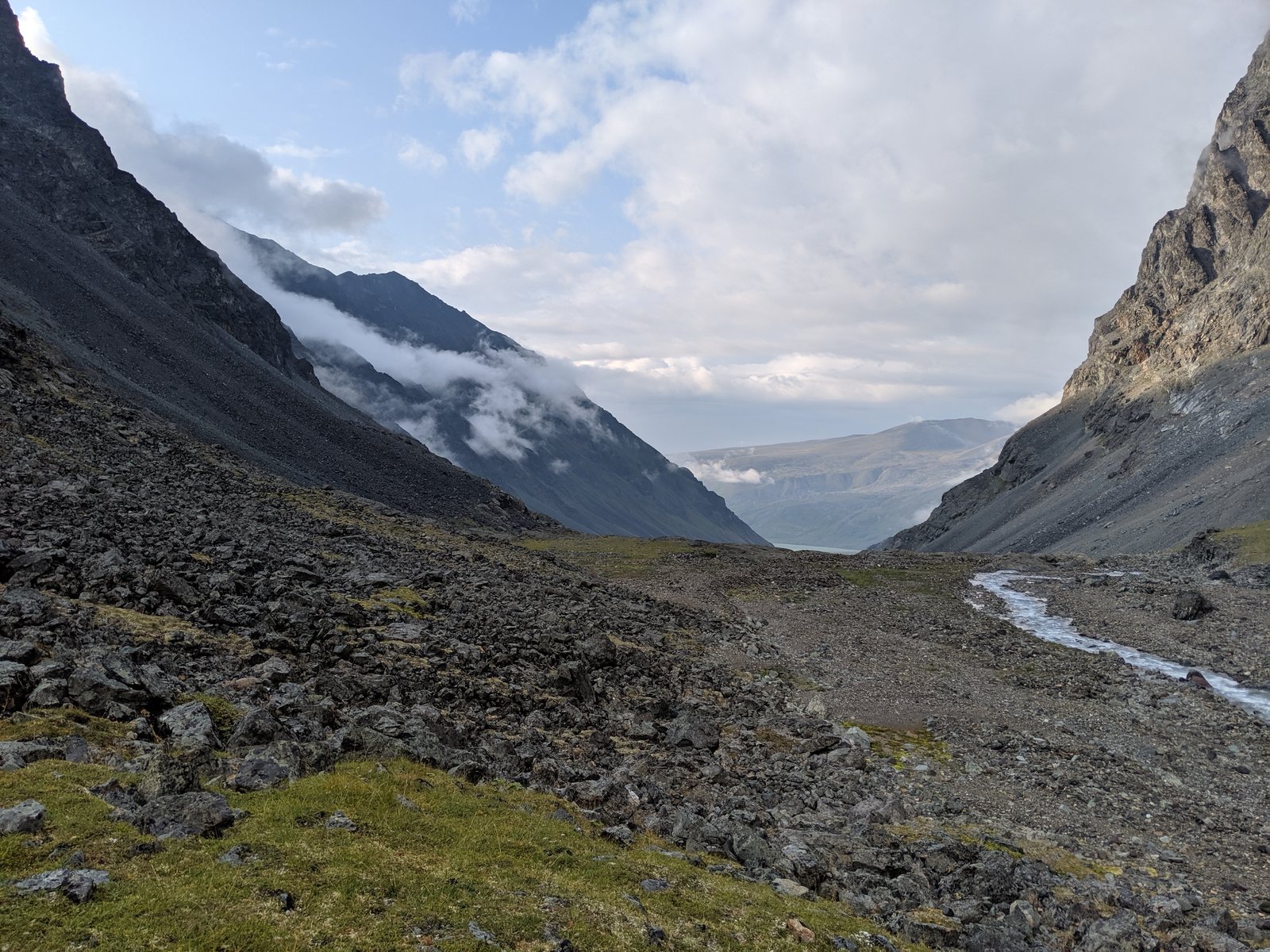
That night I barely slept. Deep into the night I lay in the tent, picturing us on the glacier. It was less steep, and the hill looked dangerous. In my head, the ice was the way.
August 21
In the morning my two friends argued for the hill. We tried the glacier first anyway, and within ten or fifteen minutes it settled the question for us: it was far too slippery, close to impossible. That worried me badly. So we took the steep hill, one friend in front and me at the back. We were nearly at the top when a water bottle fell out of a friend’s pack, and for a moment he actually considered climbing back down for it. The other two of us thought he had lost his mind. We had spare bottles. The bottle stayed where it fell.
The day was collecting its tolls. One of us had packed several lenses for his camera, and by this third day his pack was so heavy, and he so tired, that he left one of his big zoom lenses behind. Somewhere in Lake Clark there is a very good lens with a very good view. In the films we had watched Proenneke shoulder loads that looked far heavier than ours, often with his camera gear along so he could film the wildlife. Bent under our own packs, we were in awe of him.
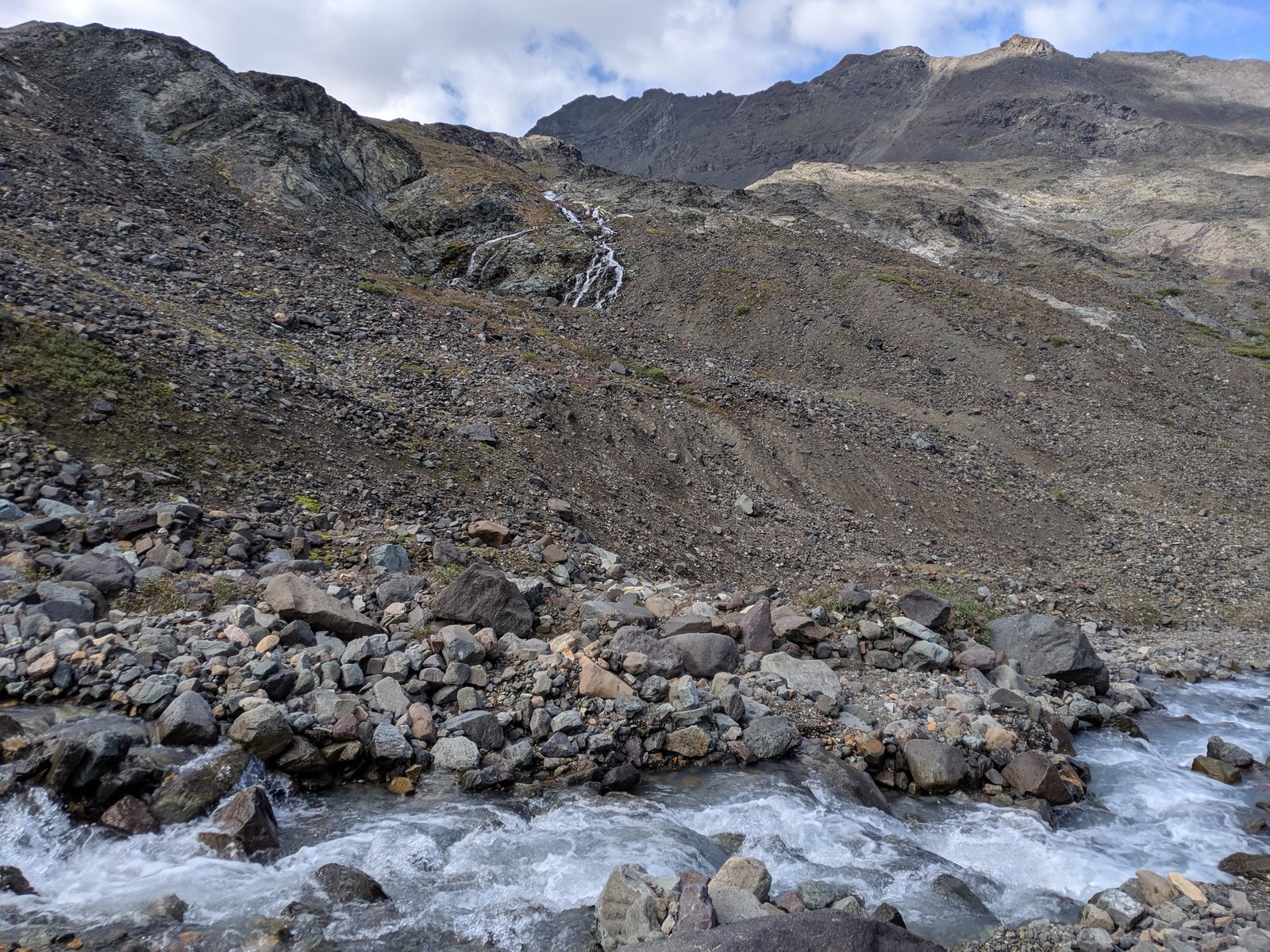
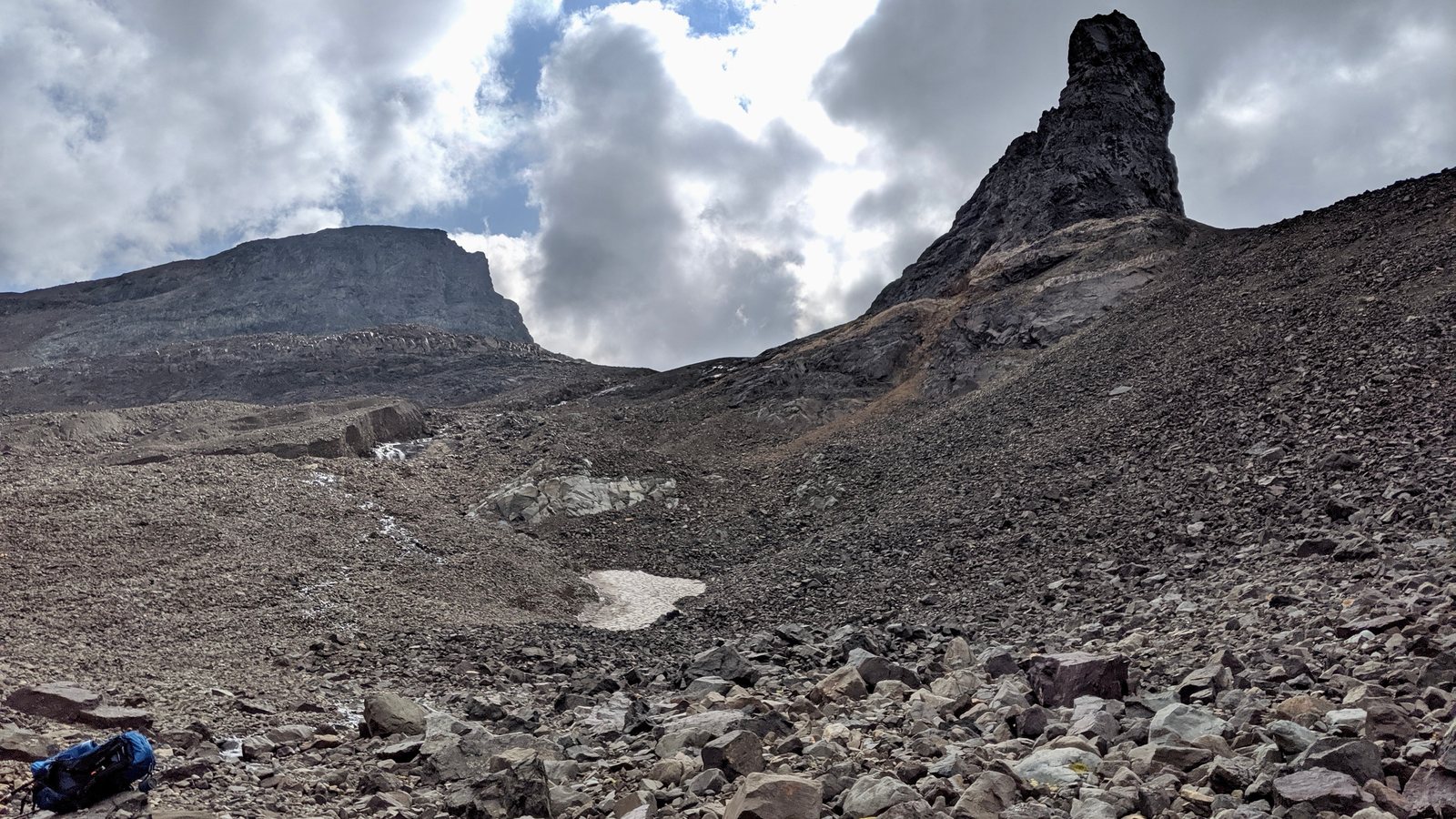
Another weight was harder to put down. The pass still ahead of us worried one of us far more than it worried the other two, and that day he grew low, and then quiet, until at some point he stopped talking with us altogether. I think I understood. He was going through what I had gone through in the tent the night before.
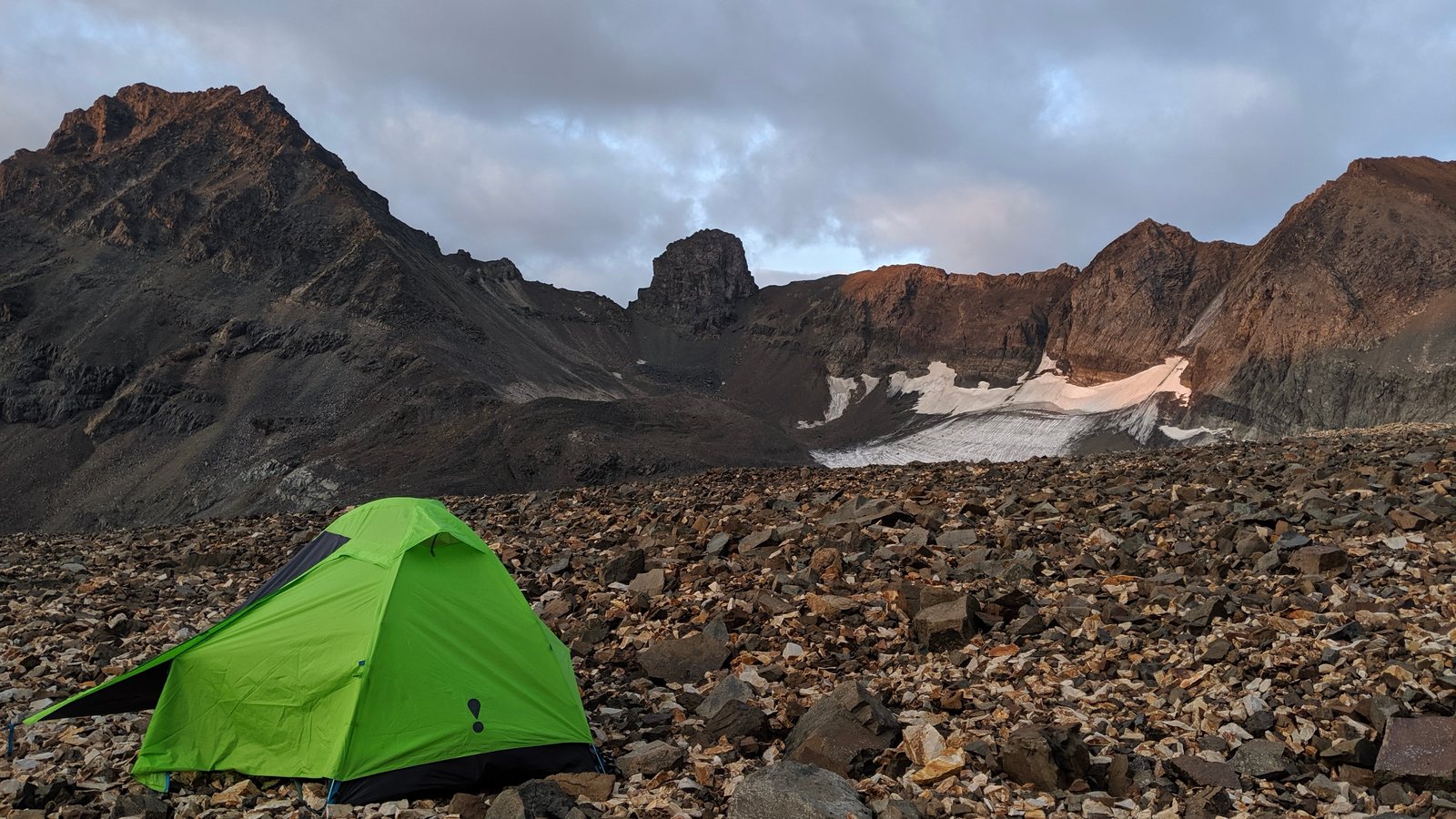
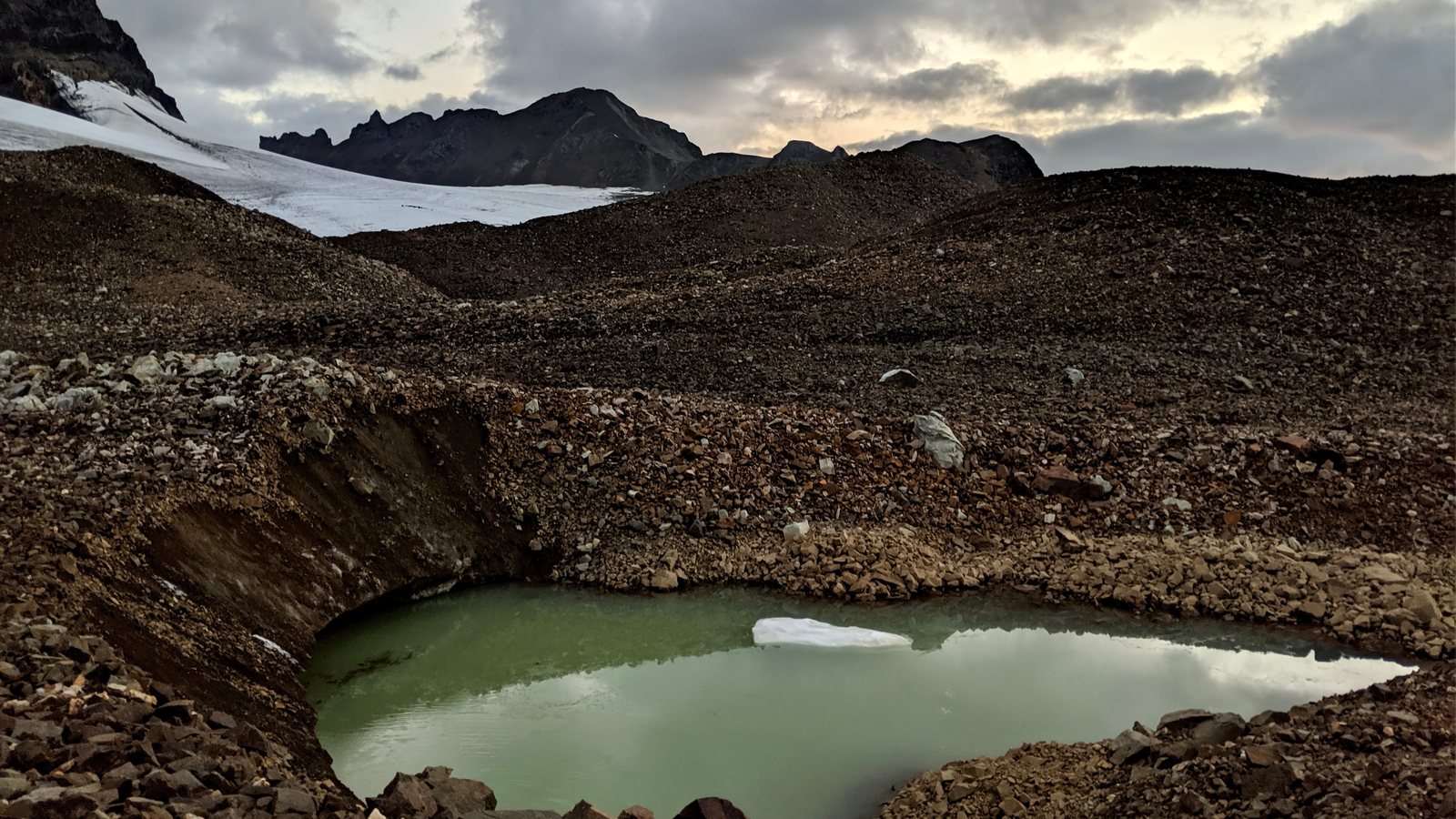
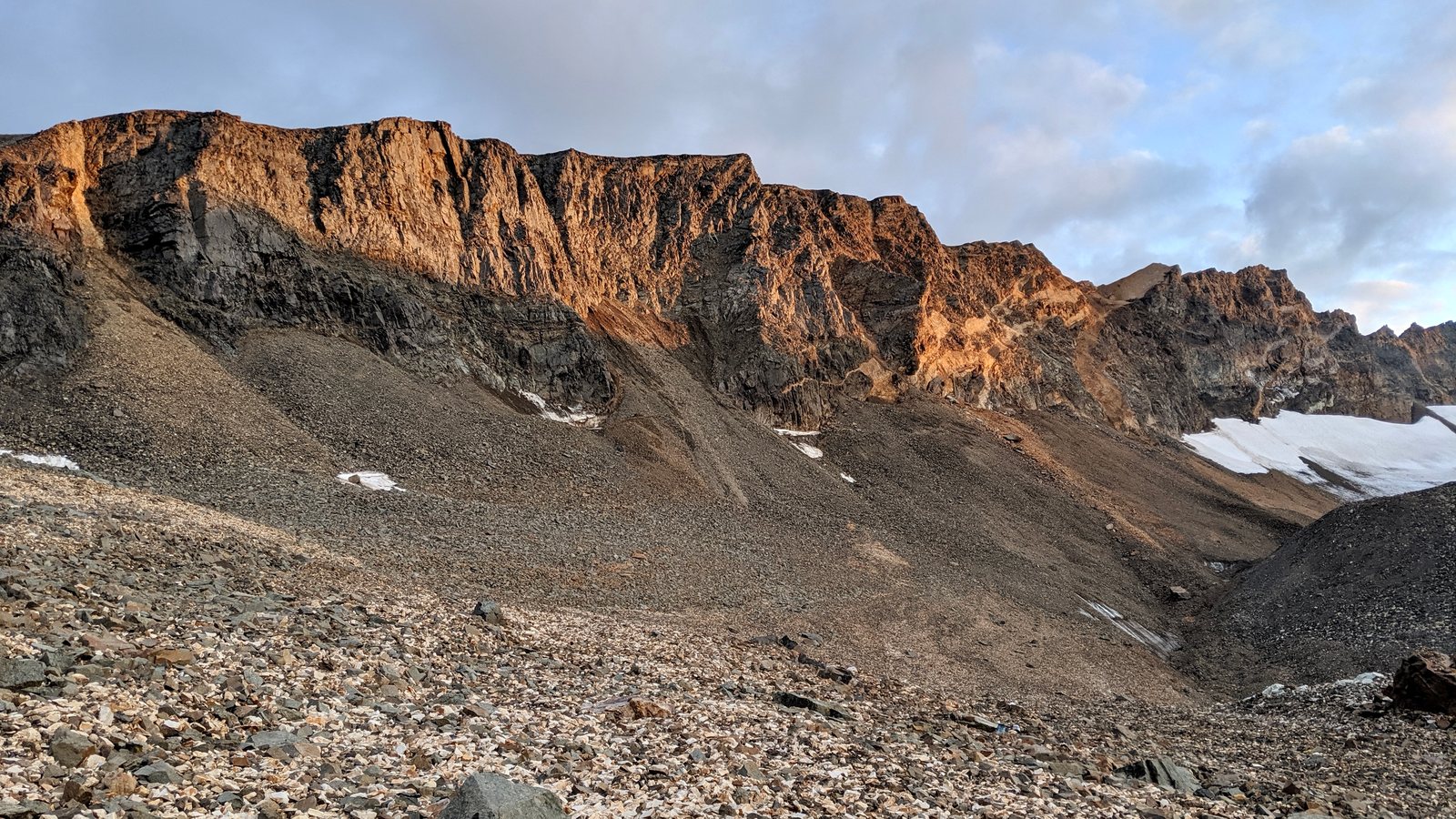
We made camp on top of a glacier buried in boulders, beside a pond we took to be glacial, with no idea which way was forward. Mountains and glaciers closed in on every side. Then the evening light caught the cliffs above us, and for a little while none of that mattered.
August 22
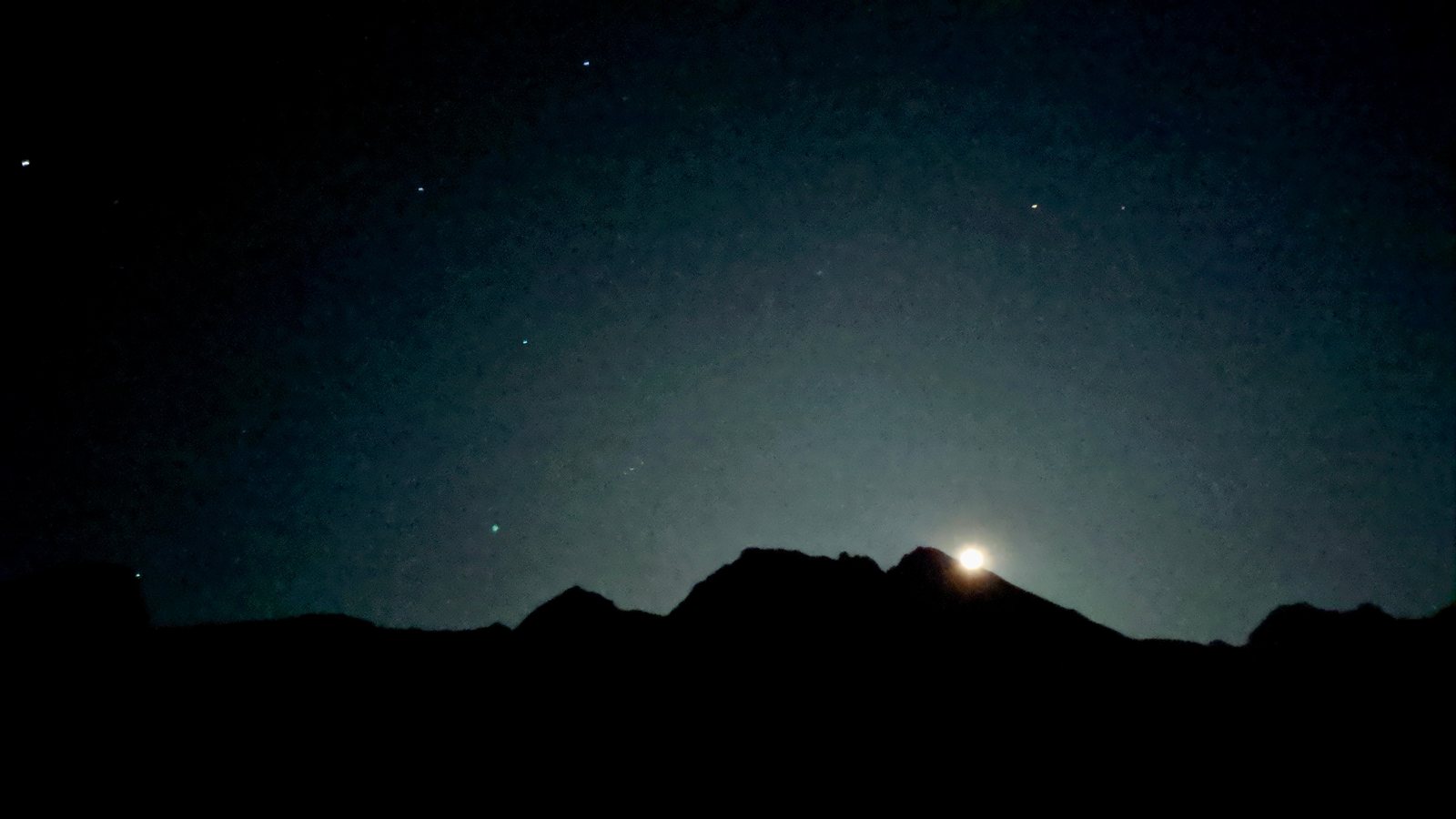
In the early afternoon we crossed the pass, at about 1,800 m, picking our way up scree and snow. Two of us hadn’t been too worried about it beforehand. Looking back, the one who had been was right: that pass was extremely difficult.
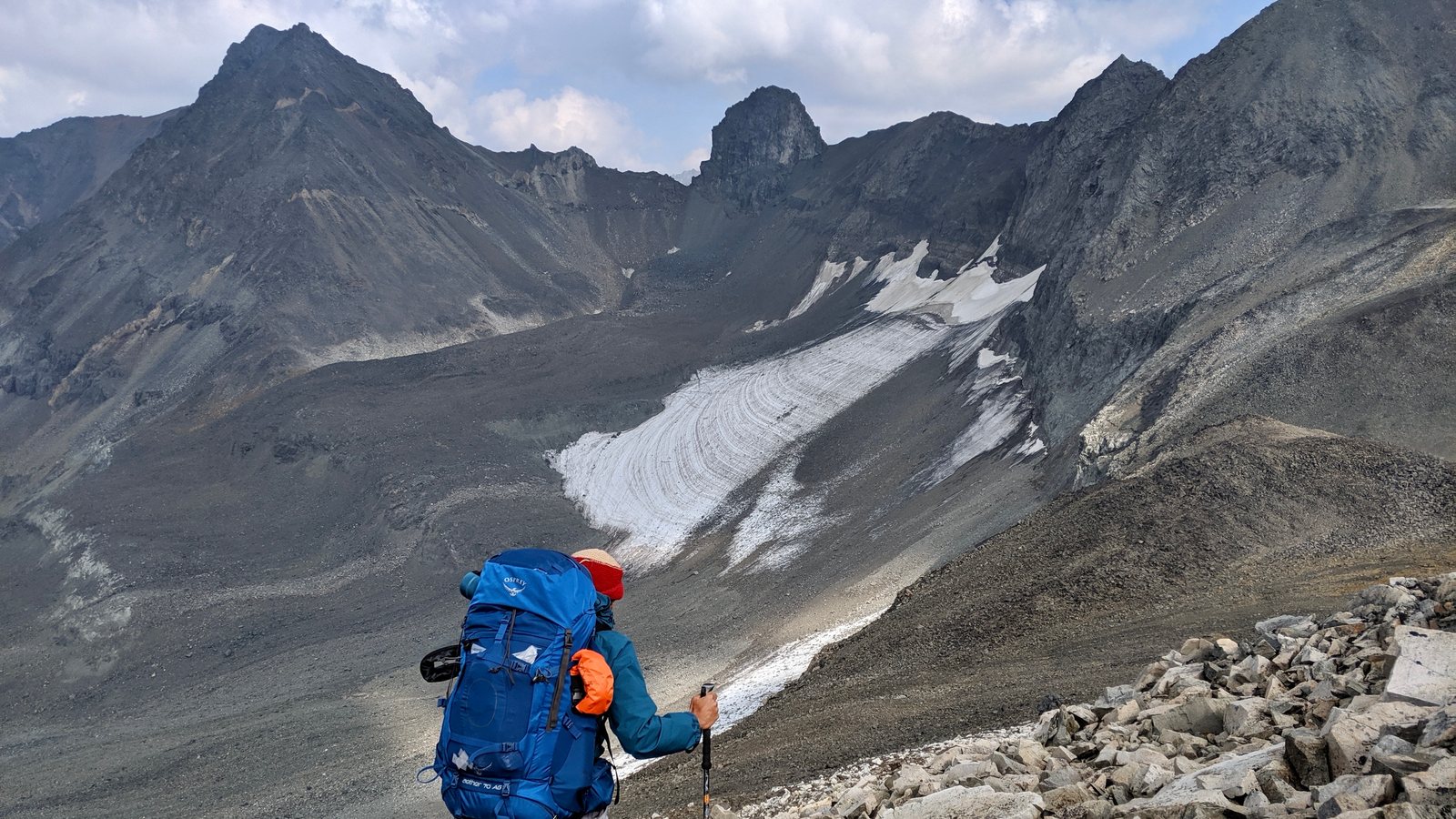
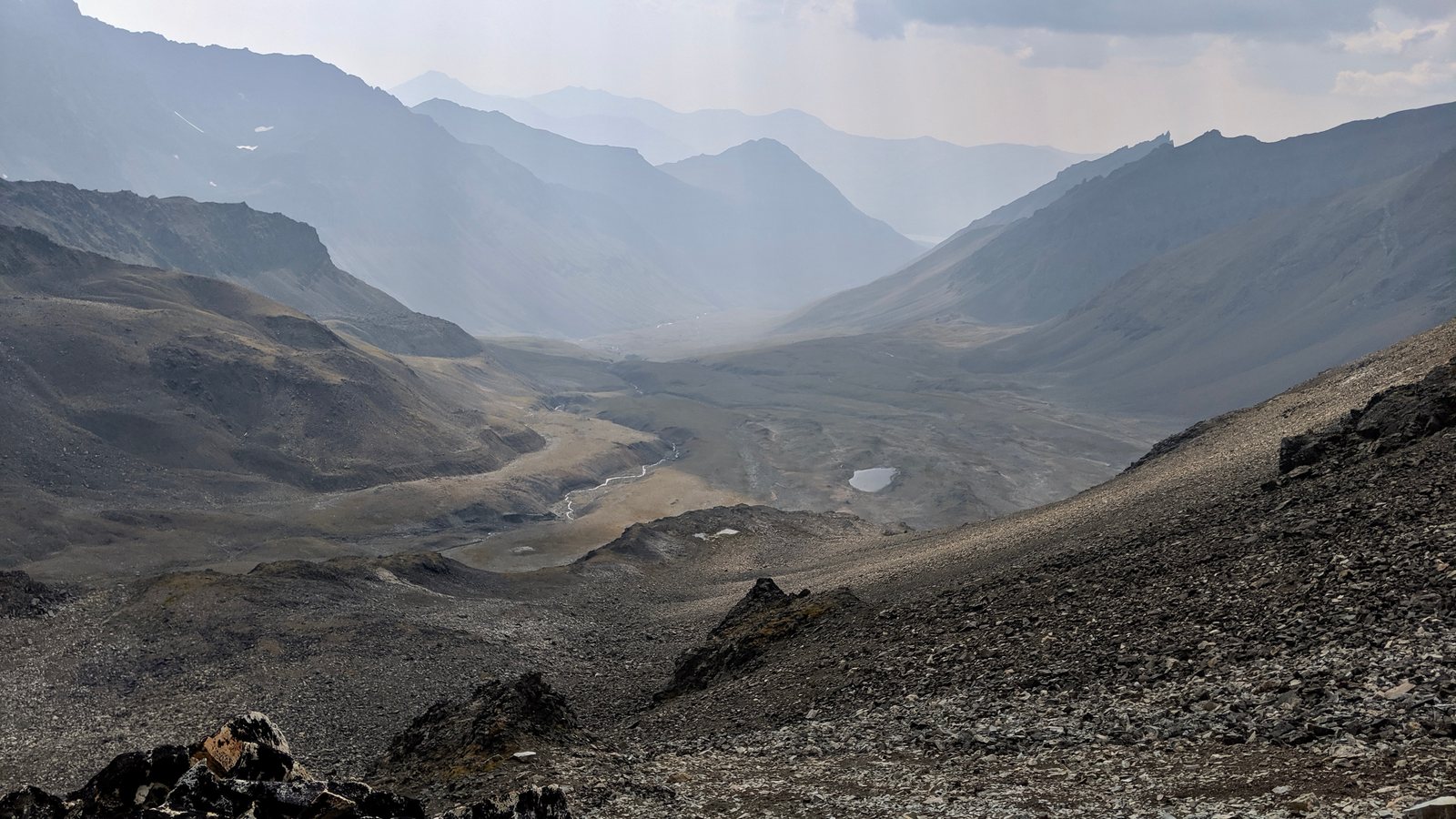
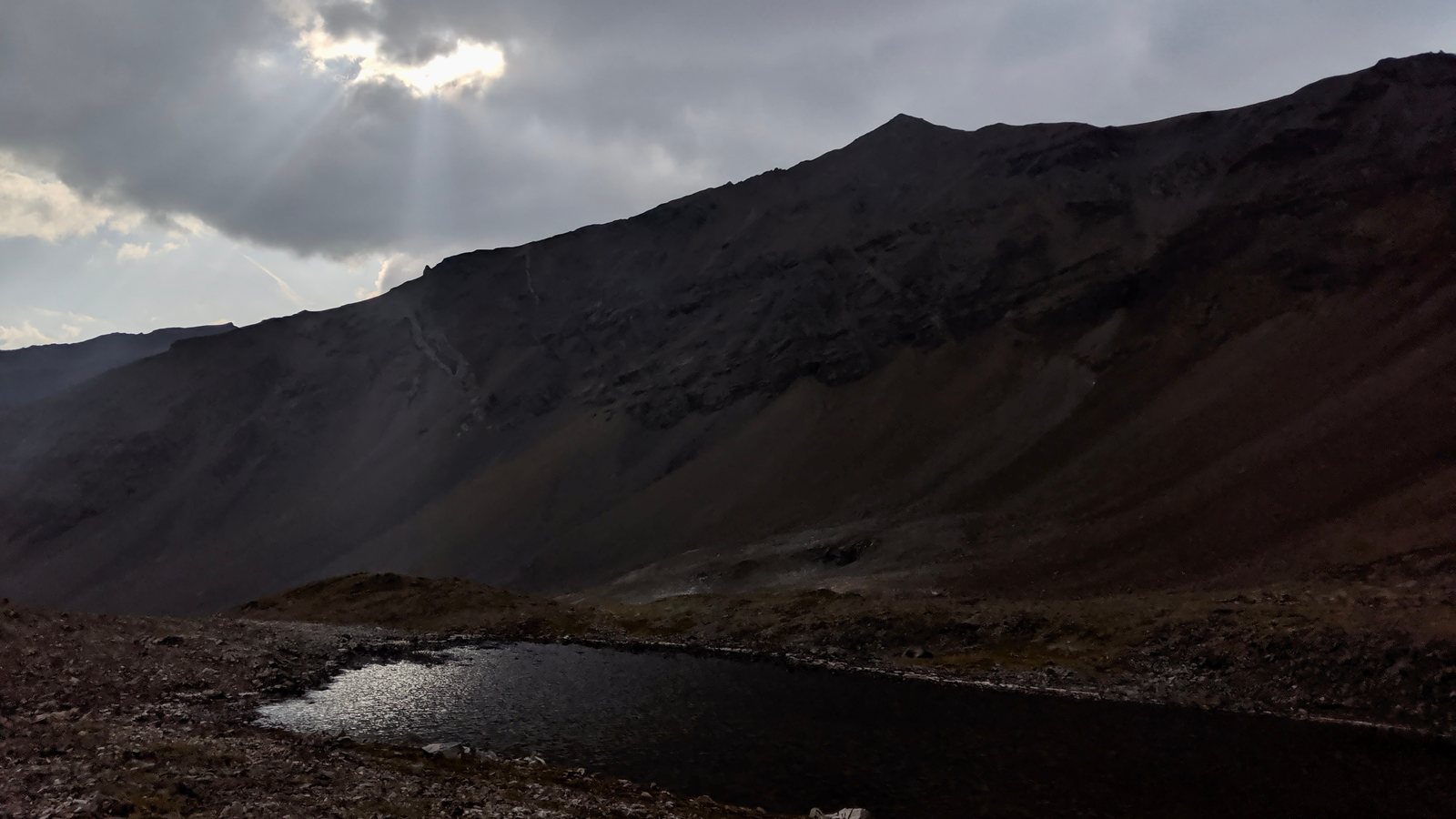
And then we were over. Coming down the far side, past a dark tarn, a relief settled on us that I can still feel. For the first time all trip we were truly relaxed. We were sure the hard days were behind us.
August 23
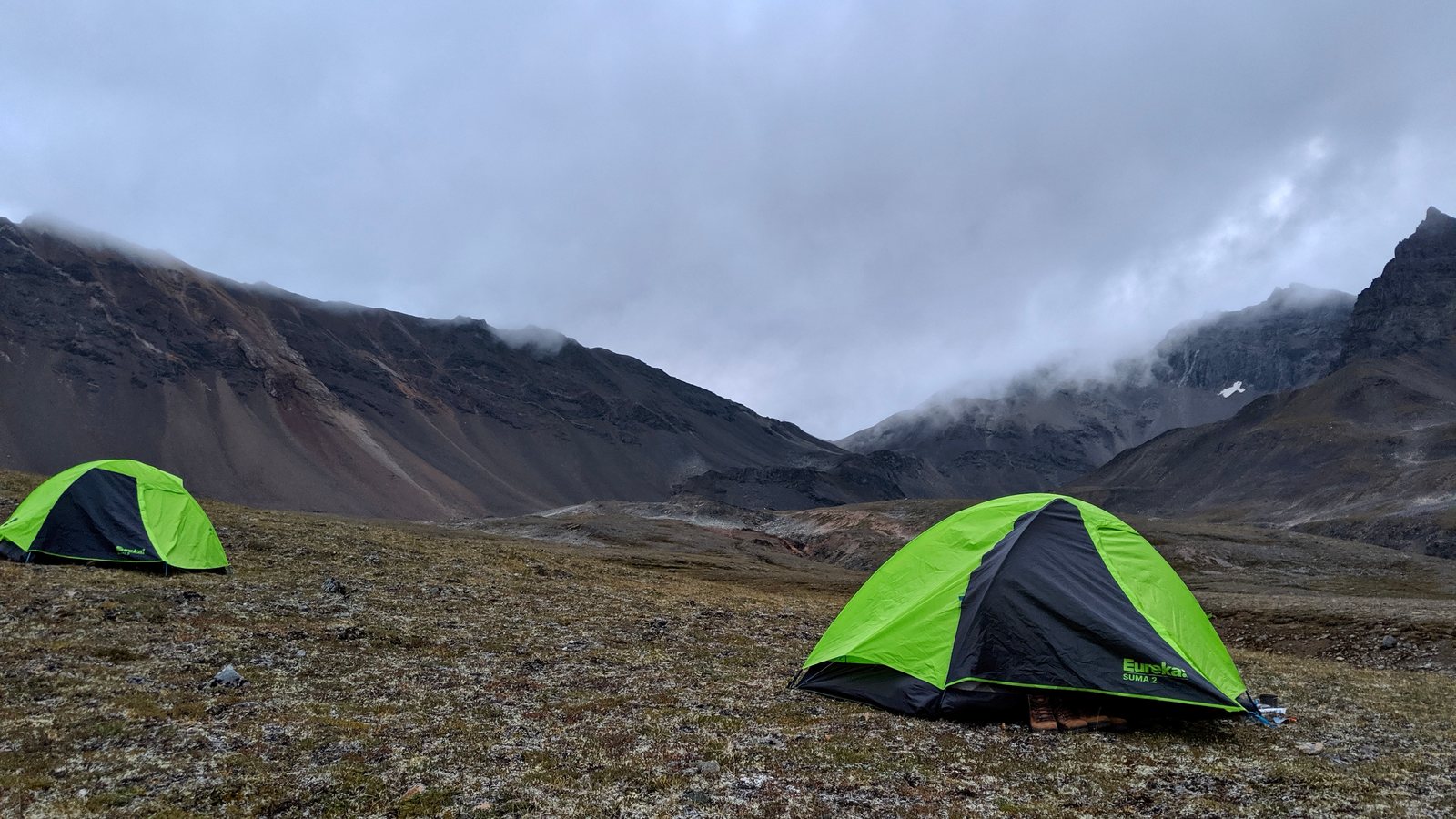
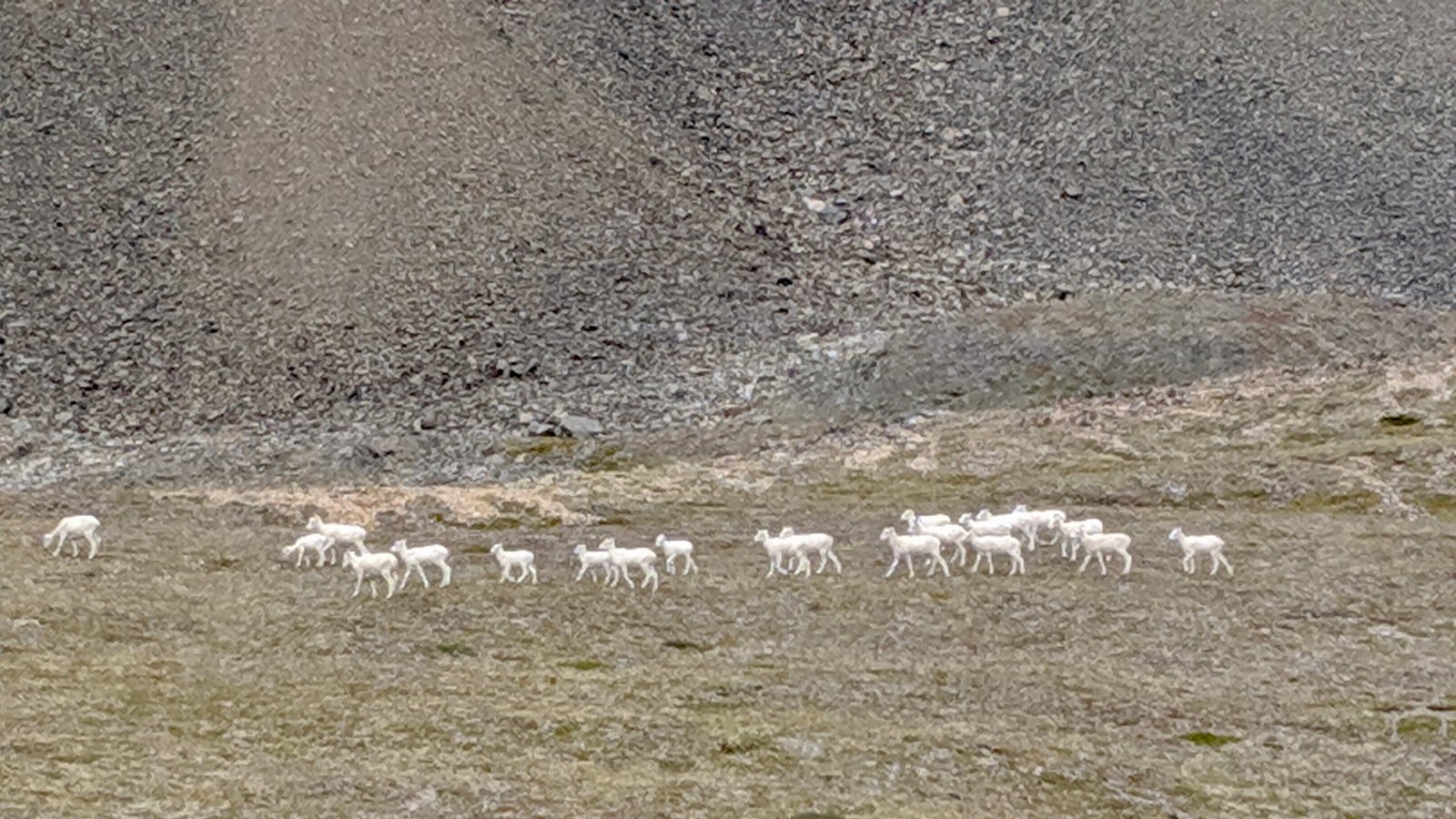
We woke to low cloud over the tents, and to Dall sheep on the slope near camp: the only big animals, as it turned out, that we would see all week.
Our good mood cost us. Relaxed after the pass, on ground that was flat in every direction and gave us nothing to take a bearing from, we lost our line and had to backtrack more than once. It was the lesson the park had been teaching us all along: a couple of degrees off, and we would find ourselves at the edge of a very tall cliff, turning back to recalibrate. But by evening, from camp, we could see the Twin Lakes in the distance.
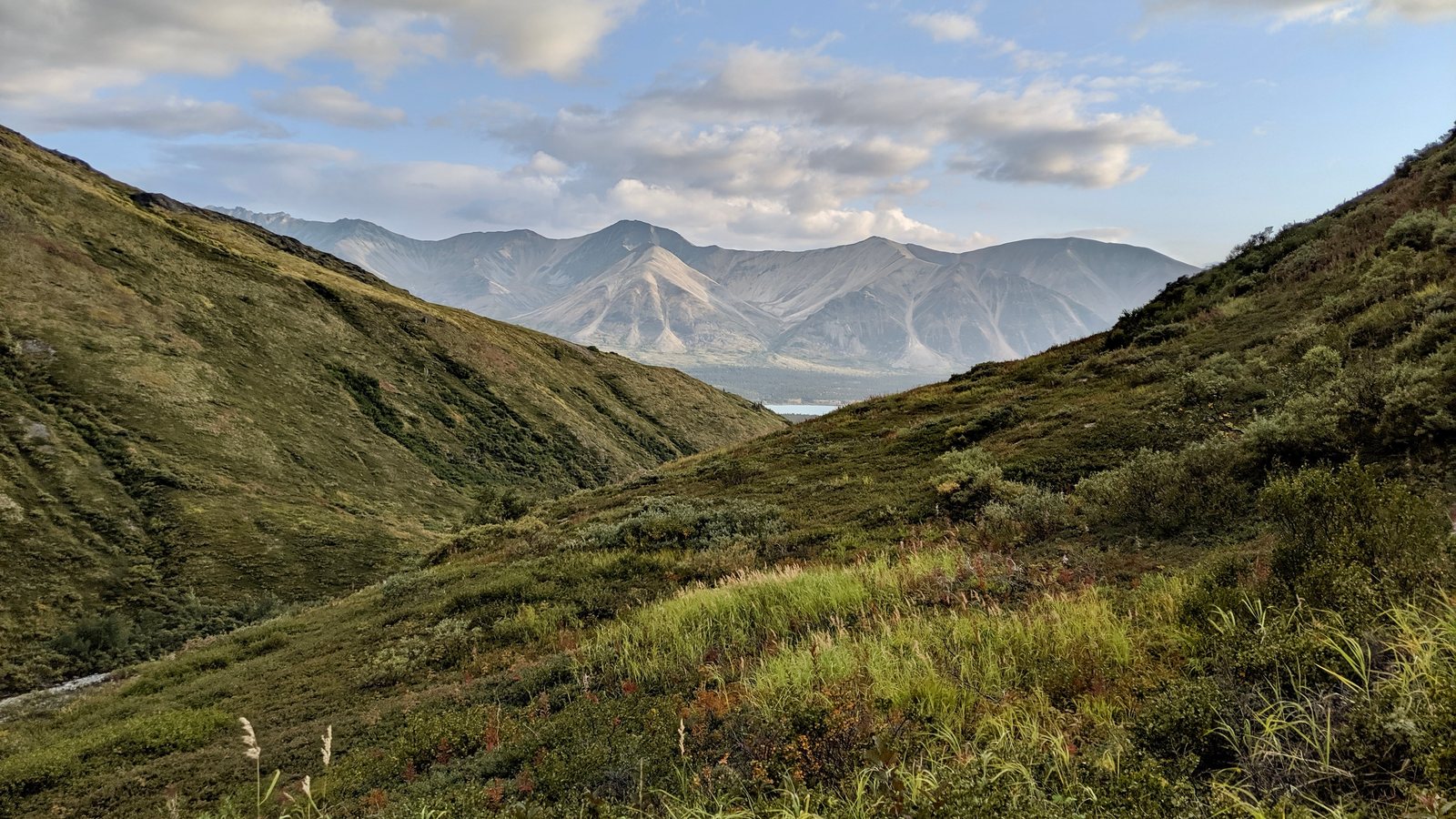
August 24
This is the day we still joke about. Between us and the lakes lay a big stretch of forest, and we crossed it.
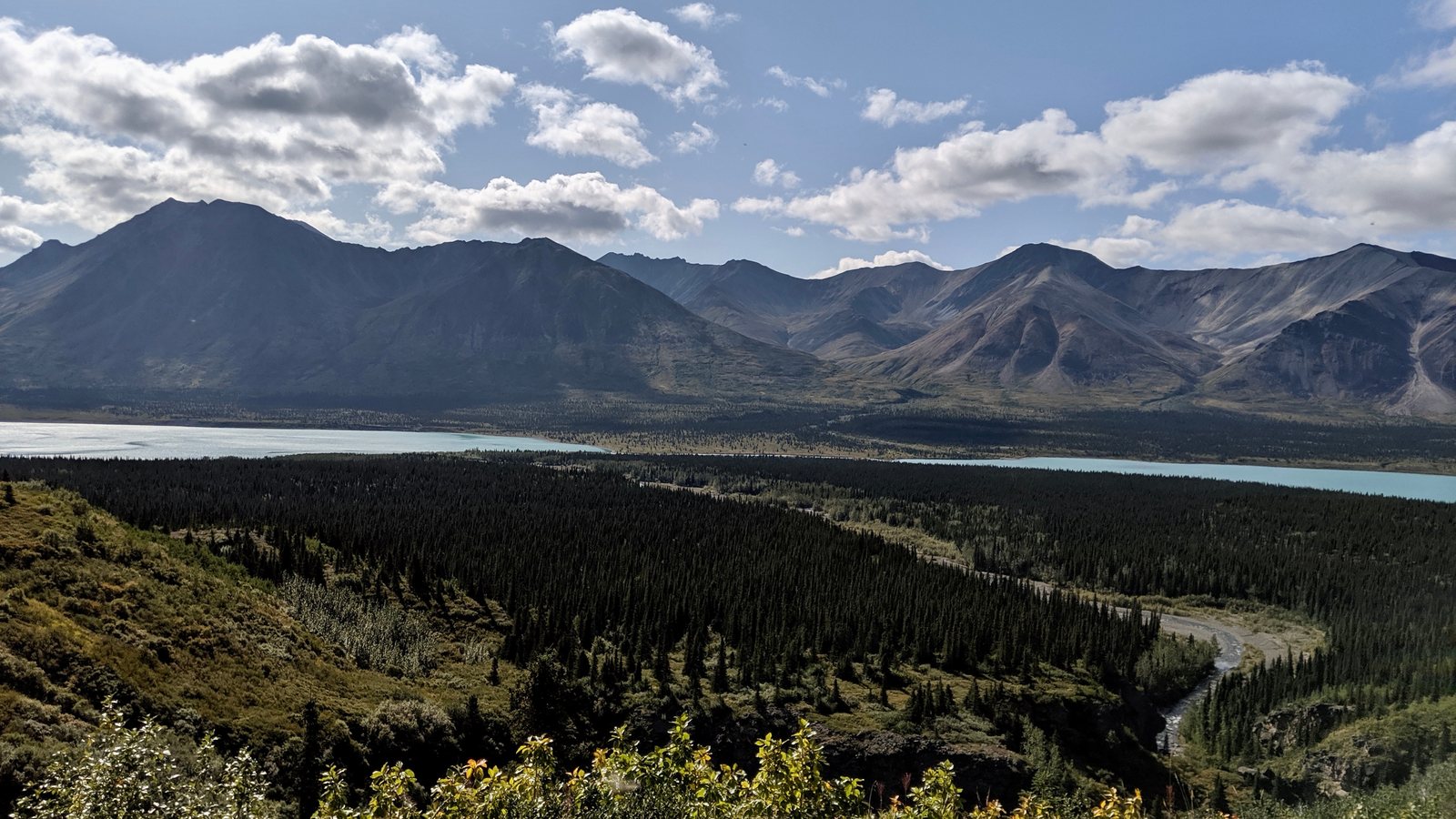
On the far side we came out at the water’s edge, at a stretch of shore that looked far too hard to follow to where the upper lake meets the lower. That was when one of us announced that he vividly remembered a fork back in the forest, and that the other branch would be better. The forest was dense. We were tired, it was getting late, and the lakes’ meeting point was still a long way off. We had passed quite a few bear droppings, and they stayed at the back of our minds. But he was so sure that we turned around. We crossed the entire forest again. There was no fork. So we turned around once more, came back to the lake, and walked the very shore we had ruled out as too difficult.
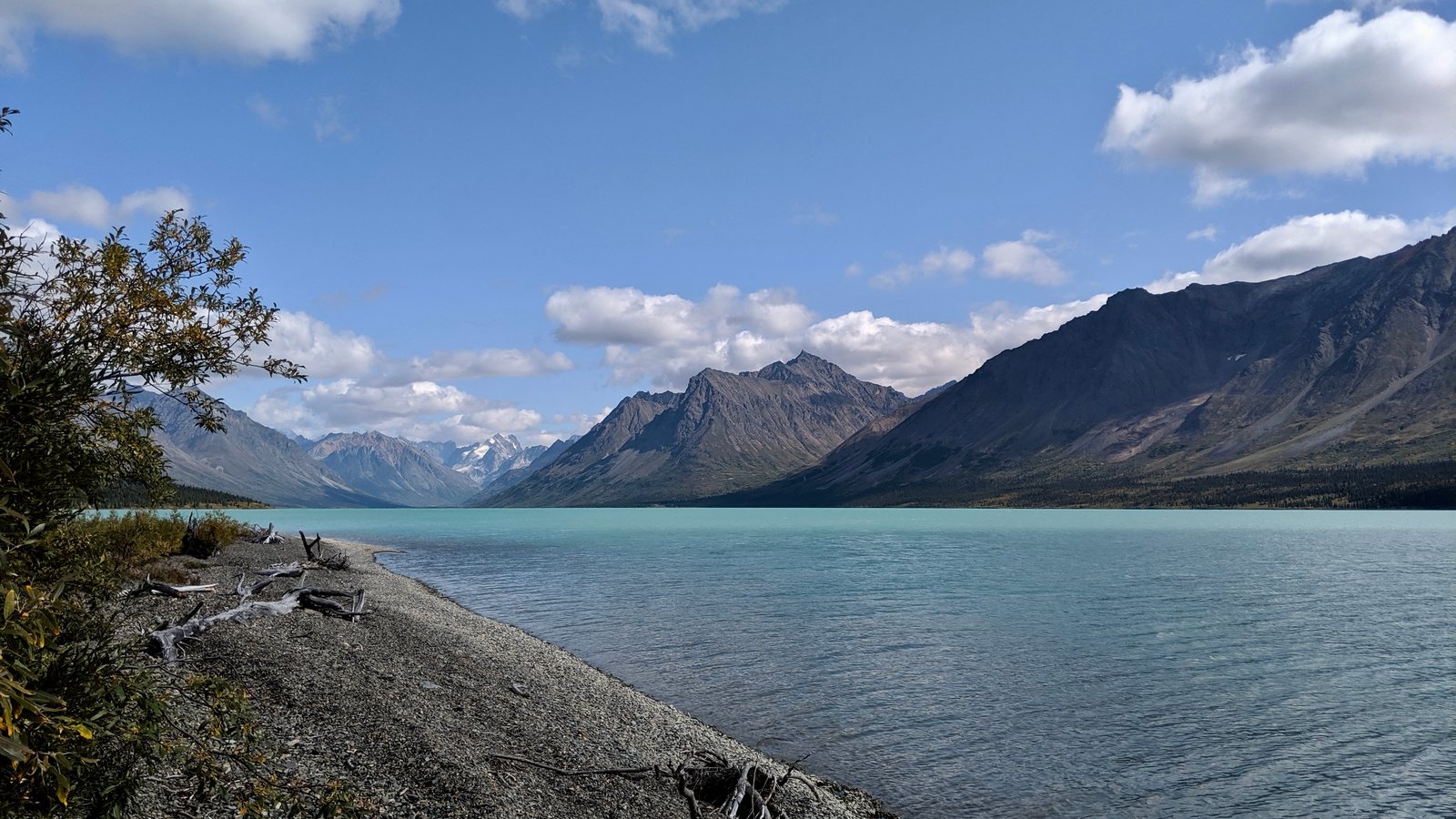
Still, it was a good day. We had reached the Twin Lakes. The channel between the upper and lower lake ran a little too strong for our comfort; one friend waded a little way in before we all agreed it was too risky to cross. So we stayed right there, on the gravel shore almost next to the channel between Upper and Lower Twin Lake, and on our last night out we sat around a campfire.
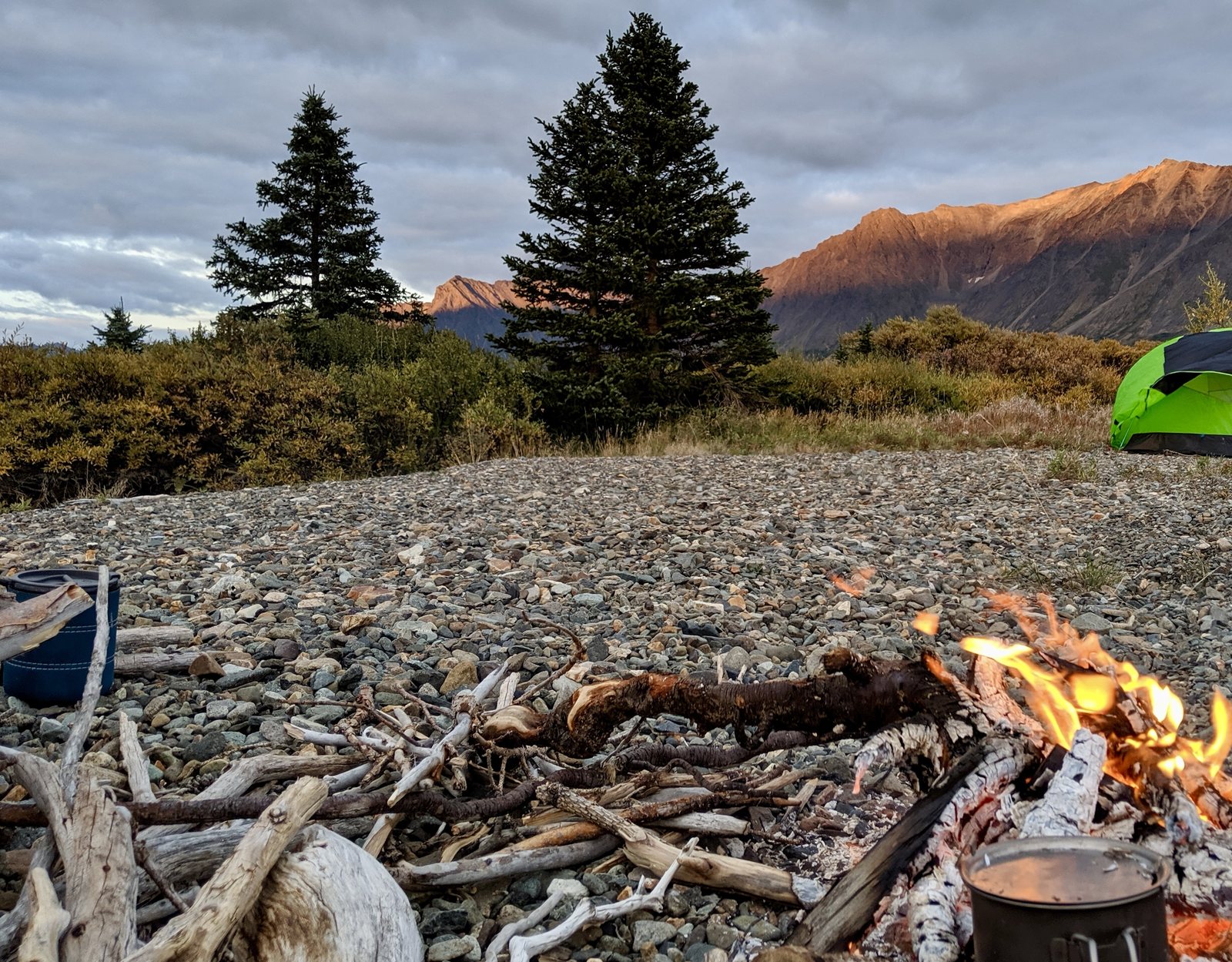
August 25
We never made it to our pickup point, Proenneke’s cabin. We sent a text over our satellite messenger to the floatplane company, hoping it would reach them in time for them to collect us near camp instead. Then we waited.
When the plane arrived, we were ecstatic. We told the pilot our story and asked whether he could take us to the cabin anyway, and he very kindly did. Without that stop, the trip would have felt unfinished.
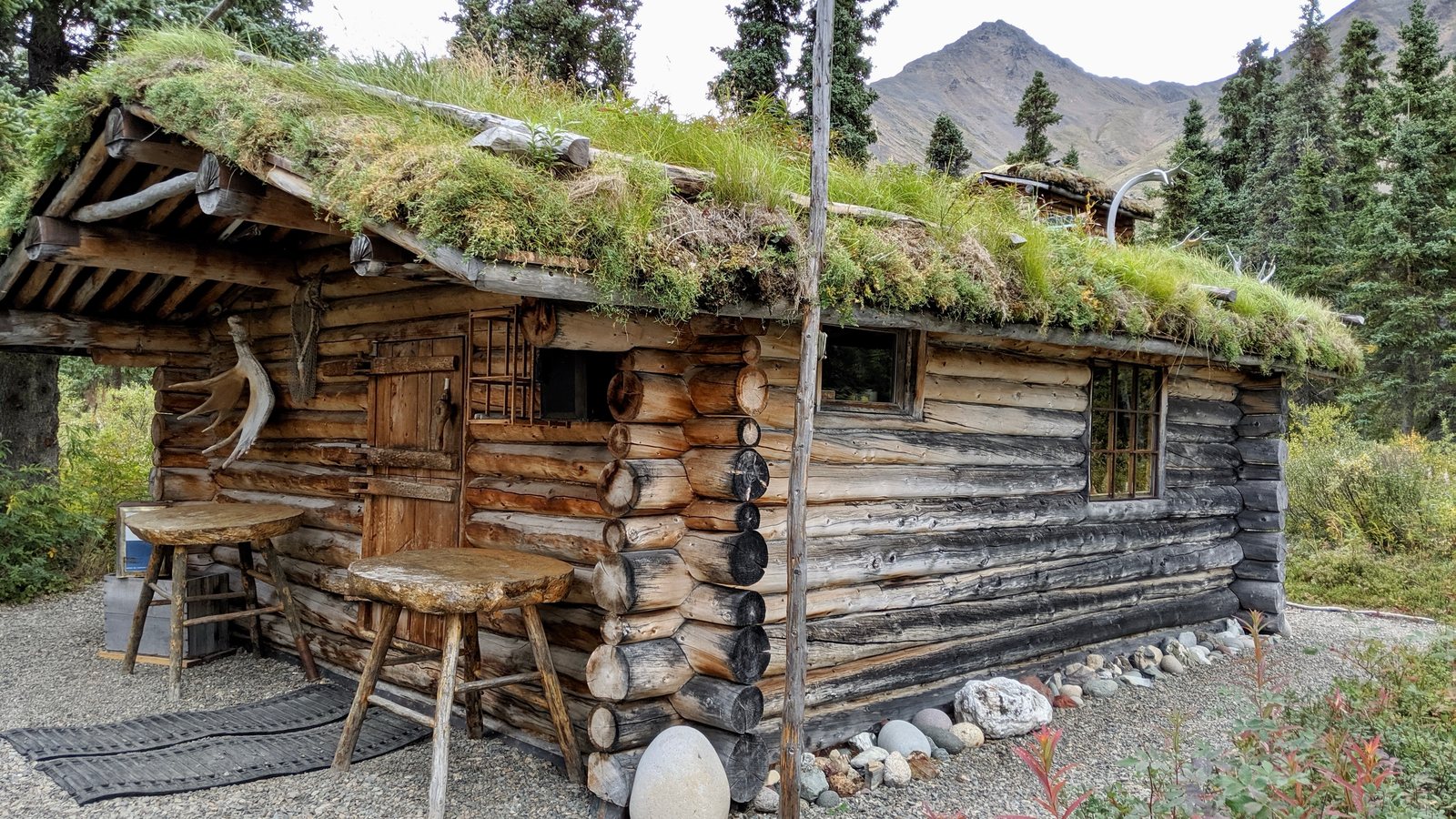
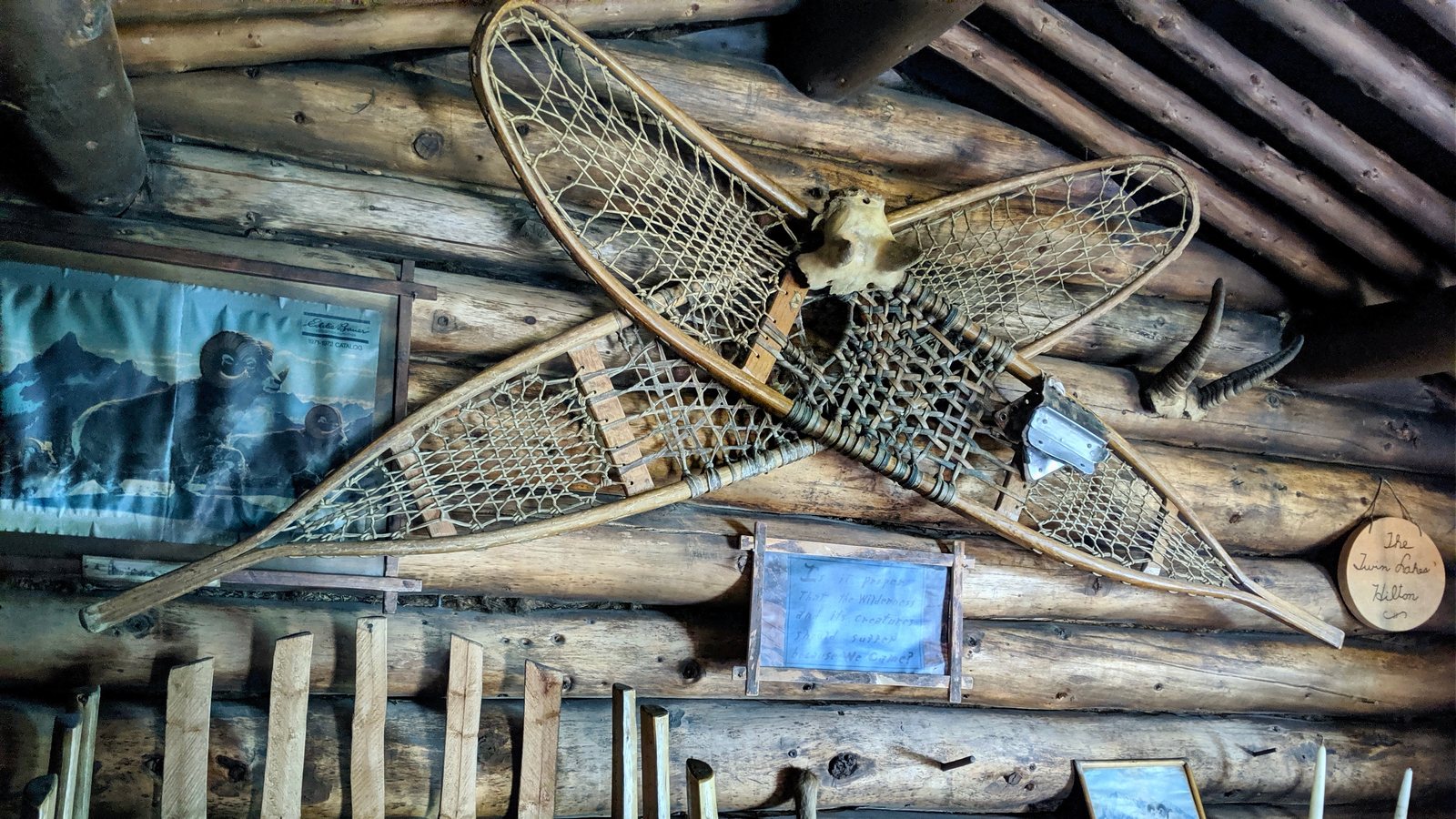
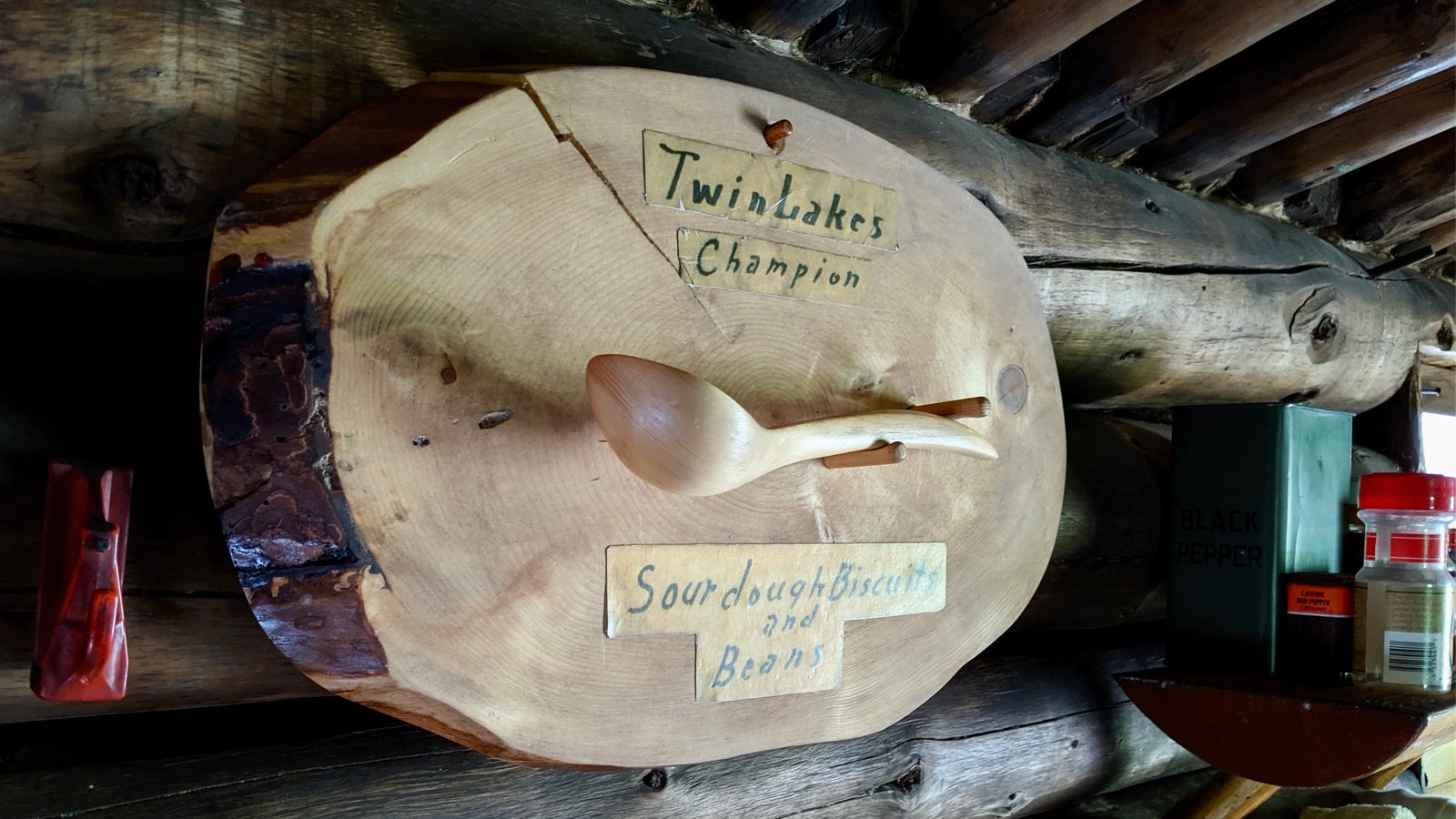
The cabin is preserved now; these days you visit only to look and take pictures. We had watched Alone in the Wilderness, the documentary his friend Bob Swerer made from Proenneke’s own film footage, and walking through his place felt like stepping into it: his fireplace, the wooden spoons he carved (one of them, his journal says, for Mary Alsworth, the wife of his bush-pilot friend Babe Alsworth, in trade for heavy boot socks), his enormous hand saw, his snowshoes, the lock on his door, the view from his window, his canoe. The list goes on. We wrote a few lines in the guestbook. I no longer remember what I wrote.
A ranger making her rounds stopped to say hi, and we gave her some Indian tea. She asked whether we had seen any bears. When we said no, she told us that was good news: she knew of a mama bear with cubs in the area. She was the only person we saw on the whole walk from Turquoise Lake to the Twin Lakes.
All week we had carried bear spray and bear canisters, and made noise and played music so that anything out there would know we were coming. Apart from the Dall sheep, I don’t remember a single big animal. A few times we heard whistling: other people, maybe, or marmots. For all our research, I never once felt afraid of the wildlife. There was so much beauty that there was no room left for anything else.
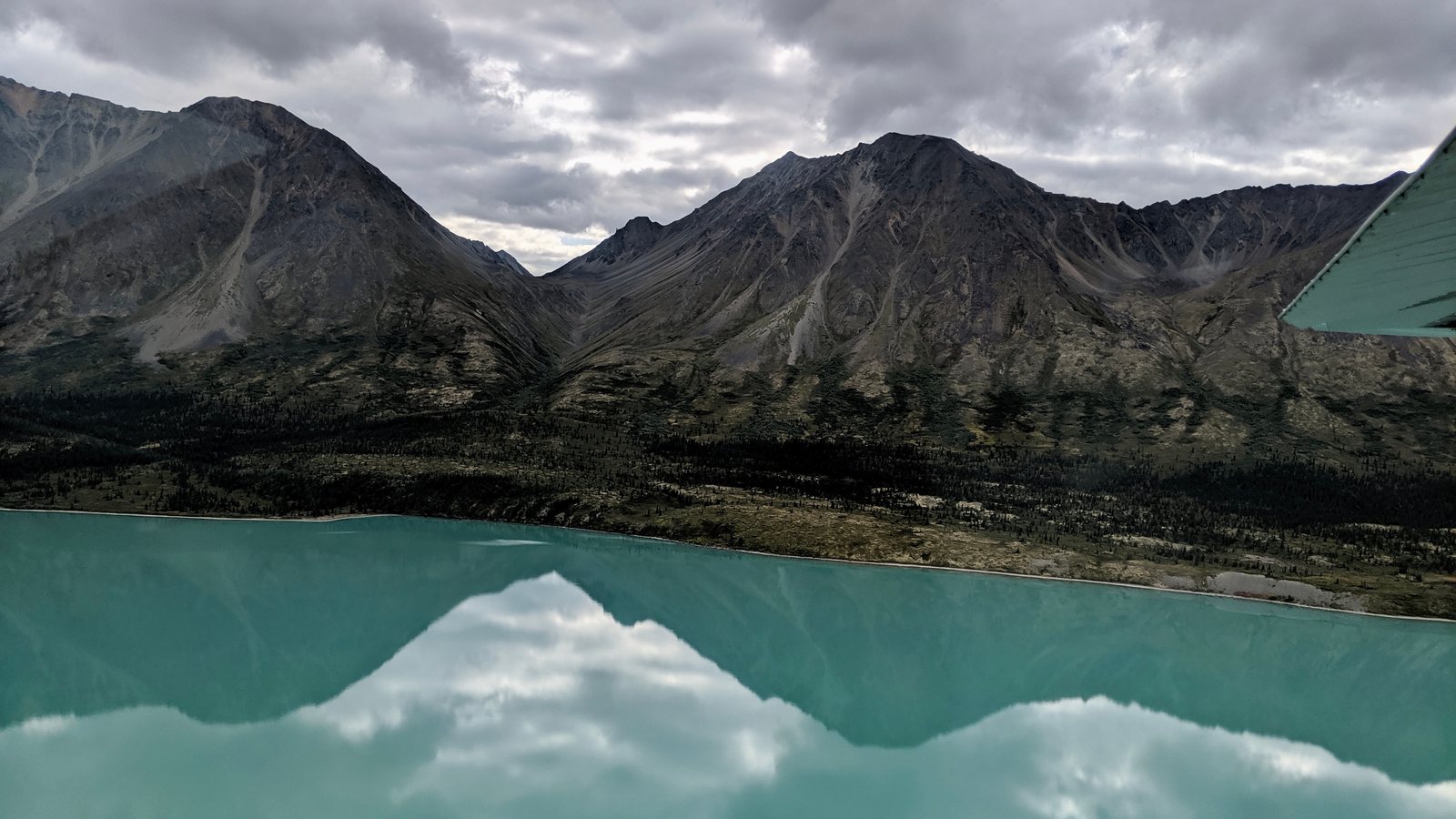
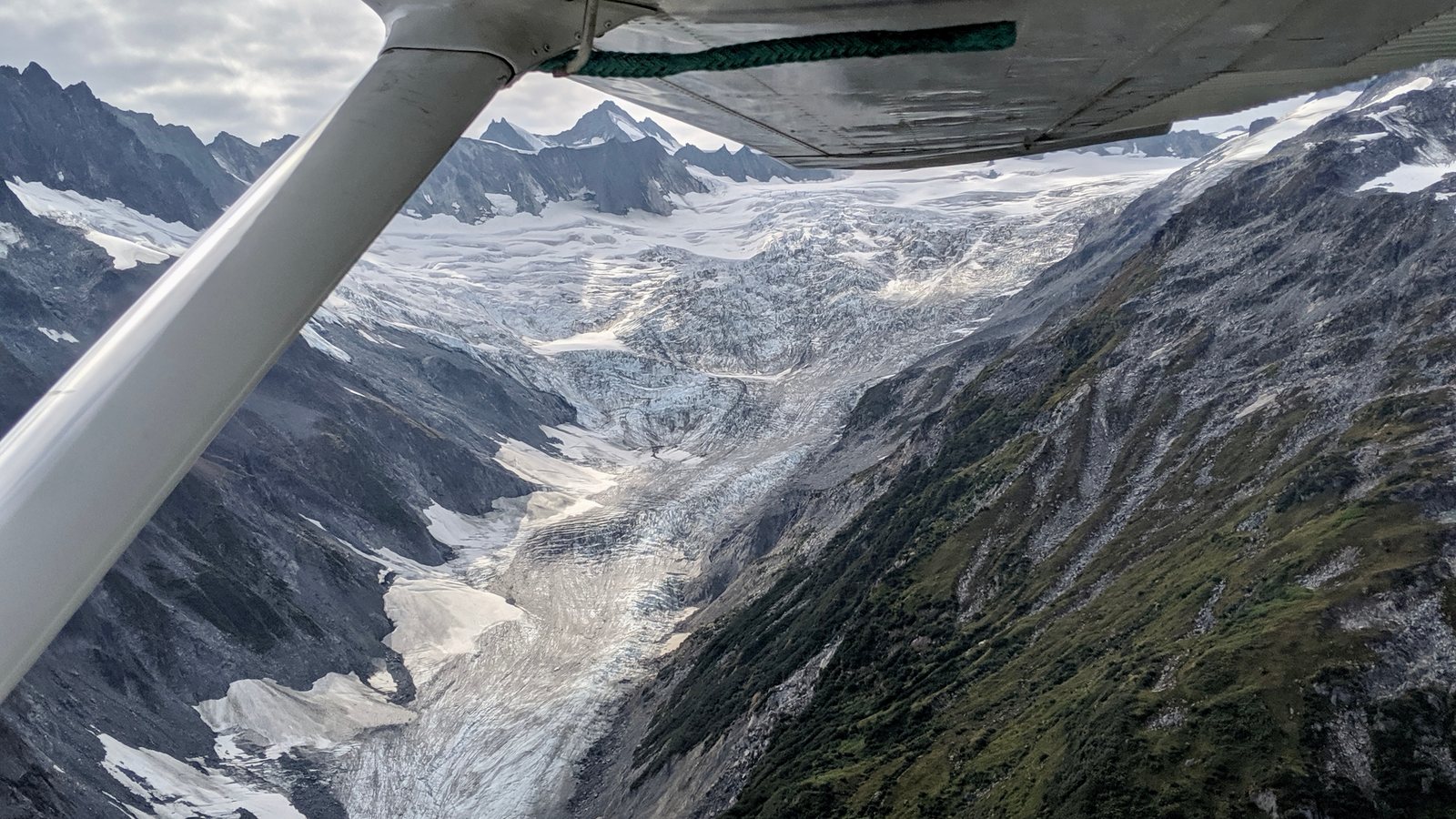
Lake Clark is one of the less visited of Alaska’s national parks, and for a week it felt like ours alone. At one point a friend said he had seen so much beauty out there that his heart was full; if these turned out to be his last days on earth, he would have no regrets. The rest of us felt much the same. We had known each other for years before this trip, and still those days brought the three of us closer than we had ever been.
We still joke about the fork that never was. I still think about the lens left behind and the bottle nobody went back for, about the campfire by the channel between the Twin Lakes, the sight of that floatplane coming for us, and about standing in Proenneke’s cabin, the one we had so nearly missed. We were young, naive and adventurous, and we went anyway. We will remember this trip for the rest of our lives.